
No products in the cart.
Updated: 27 September 2026
Nitro Washed
Nitro Fermentation: anaerobic fermentation with nitrogen
Nitro Fermentation is a modern process in which fermentation is controlled in an anaerobic environment with the help of nitrogen. In OVRIDE’s lineup, this method appears in coffees like Lubeniță – Colombia, where the process is also labeled Nitro Washed.
You can think of it as a variation within the Culturing family: controlled fermentation, starter cultures, monitoring, and more precise technical intervention than in a classic process.
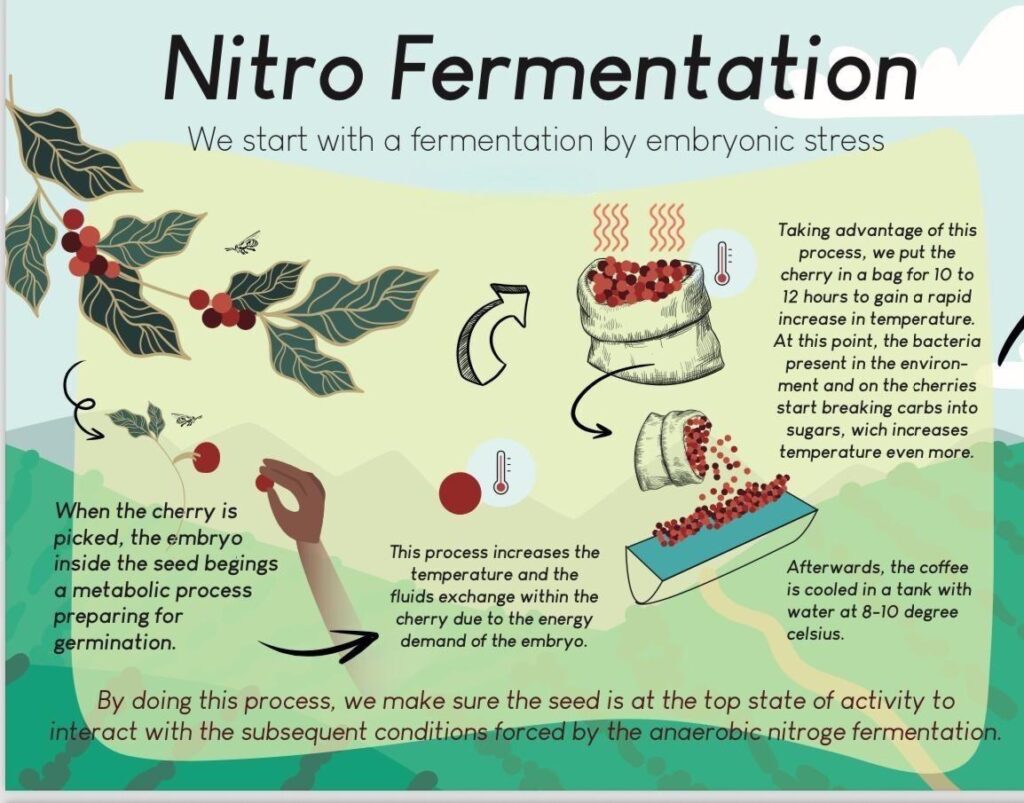
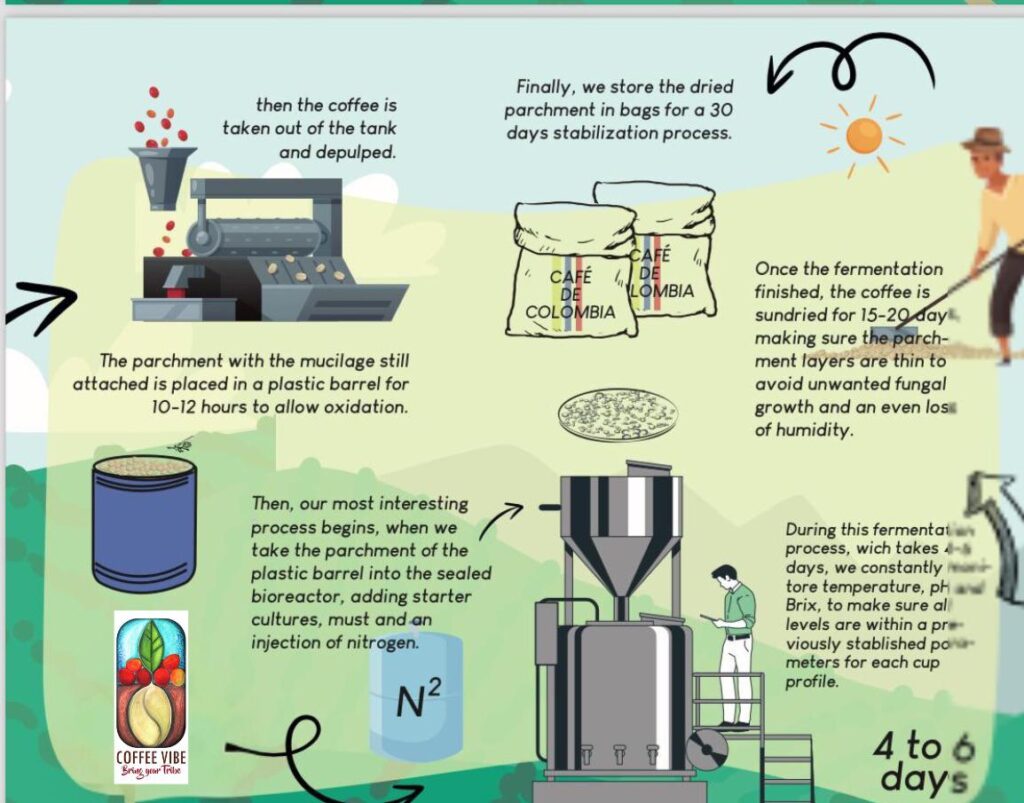
Visual materials supplied by the producer
The Process, Step by Step
Why It’s Sometimes Called Nitro Washed
The term Nitro Washed makes sense because the process keeps a washed logic: the coffee is depulped, fermented under control, then washed and dried.
But it’s not classic washed. The major difference is the anaerobic fermentation controlled with nitrogen, starter cultures, and monitoring.
On the label, you may see both terms used:
Nitro Fermentation / Nitro WashedThe first name explains what sets it apart. The second explains why the term "washed" shows up in the process name.
How the Producer Describes the Process
According to the technical materials we received for the Lubeniță coffee, the process starts with a stage of embryonic stress. After harvest, the cherry enters a metabolic process, and the producer uses this activity to prepare the coffee for controlled fermentation.
The steps described in the producer’s materials include:
- the cherries are placed in bags for 10-12 hours for a rapid rise in temperature;
- the coffee is cooled in water at 8-10 C;
- the coffee is depulped;
- the parchment with remaining mucilage is placed in a plastic barrel for 10-12 hours for oxidation;
- then the central stage begins: the parchment is moved into a sealed bioreactor;
- starter cultures, must, and nitrogen are added;
- fermentation lasts 4-6 days;
- temperature, pH, and Brix are monitored;
- the coffee is sun-dried for 15-20 days;
- the dried parchment is stabilized in bags for roughly 30 days.
What Role Nitrogen Plays
Nitrogen helps create and maintain a controlled environment with limited oxygen. In an environment like this, fermentation can develop differently than in a classic fermentation exposed to oxygen.
Important: nitrogen isn’t a flavoring. It doesn’t "taste like melon" by itself. Its role has to do with the fermentation environment and how the microorganisms and the coffee interact within it.
What Flavor It Can Produce
Nitro Fermentation can produce coffees with:
- very clear fruit;
- tropical or red fruit notes;
- intense sweetness;
- lively acidity;
- a candy-like sensation;
- a very easy-to-recognize profile.
With Lubeniță, the product’s name communicates exactly the sensory direction: a coffee with obvious, juicy, memorable fruit.
Why Transparency Matters to You
A Nitro Fermentation coffee shouldn’t be presented vaguely, just as "anaerobic". Yes, the process is anaerobic, but that doesn’t say enough.
If the profile is very obvious, you deserve to know where it comes from: modern fermentation, starter cultures, co-fermentation, or another controlled protocol. The method isn’t the problem when it’s done well and communicated correctly.
OVRIDE Coffees with Nitro
- Lubeniță – Colombia: Nitro Washed;
- SAKURA Legends – Colombia: Culturing, Nitro.
Frequently asked questions
Is Nitro Fermentation the same thing as Nitro Cold Brew?
No. Nitro Cold Brew is a cold drink infused with nitrogen at the point of service. Nitro Fermentation is a processing method applied to green coffee, at origin, before roasting.
Is Nitro Washed a classic washed process?
No. It’s a process with a washed foundation, but it includes anaerobic fermentation controlled with nitrogen, starter cultures, and monitoring. That’s why it can have a much more expressive profile than a classic washed.
Does the nitrogen give the coffee its flavor?
No. Nitrogen isn’t a flavoring. Its role is to create a controlled fermentation environment with limited oxygen. The taste comes from the coffee, the microorganisms, the cultures, the must, the time, the temperature, and the conditions of the process.
Continue with
Sources
- Café Uba – https://www.cafeuba.com/pages/about-us
- SCA, "The Fermentation Effect" – https://sca.coffee/sca-news/25-magazine/issue-10/english/the-fermentation-effect-25-magazine-issue-10
- Producer-supplied Nitro images: