
No products in the cart.
Updated: 2 October 2026
Controlled fermentation
Culturing: controlled fermentation with starter cultures
Culturing is a modern processing method based on controlled fermentation. Instead of leaving fermentation entirely to chance, the producer works with time, temperature, starter cultures, microorganisms, and, in some cases, prepared ingredients to guide the coffee's final profile.
In the OVRIDE range, the term Culturing comes from our relationship with producers such as Julio Madrid and Julio Andrés Quiceno of Café Uba, in Colombia.
Visual materials supplied by the producer
The process, step by step
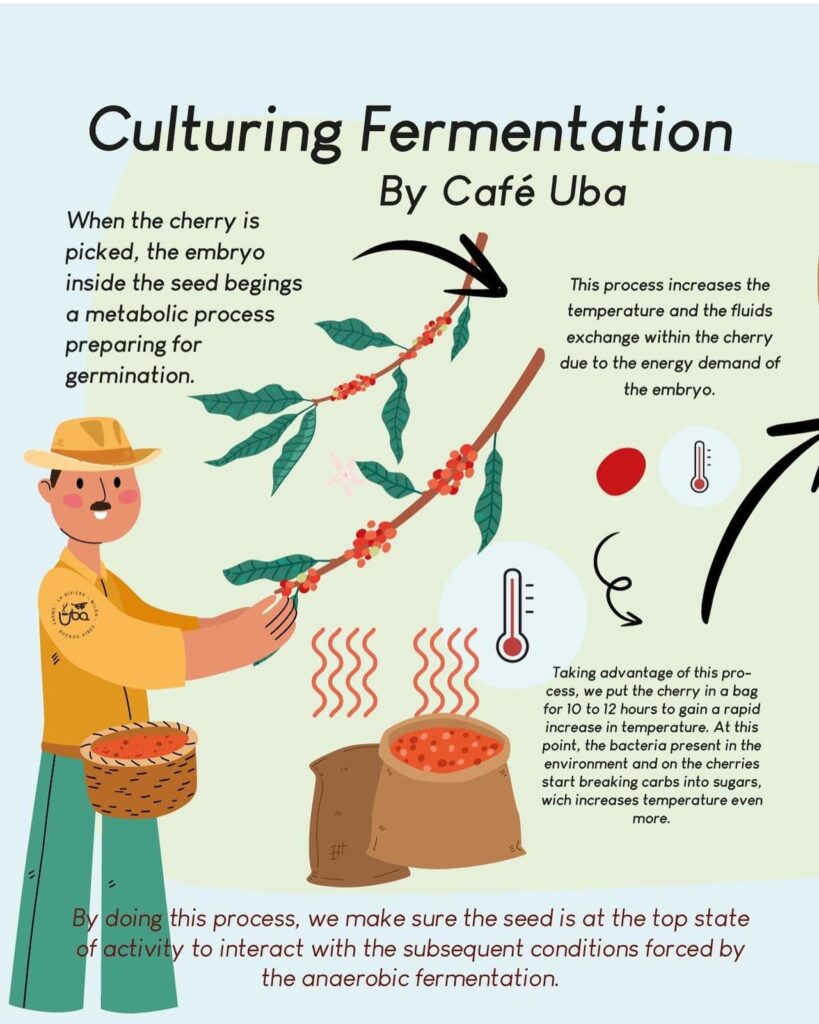
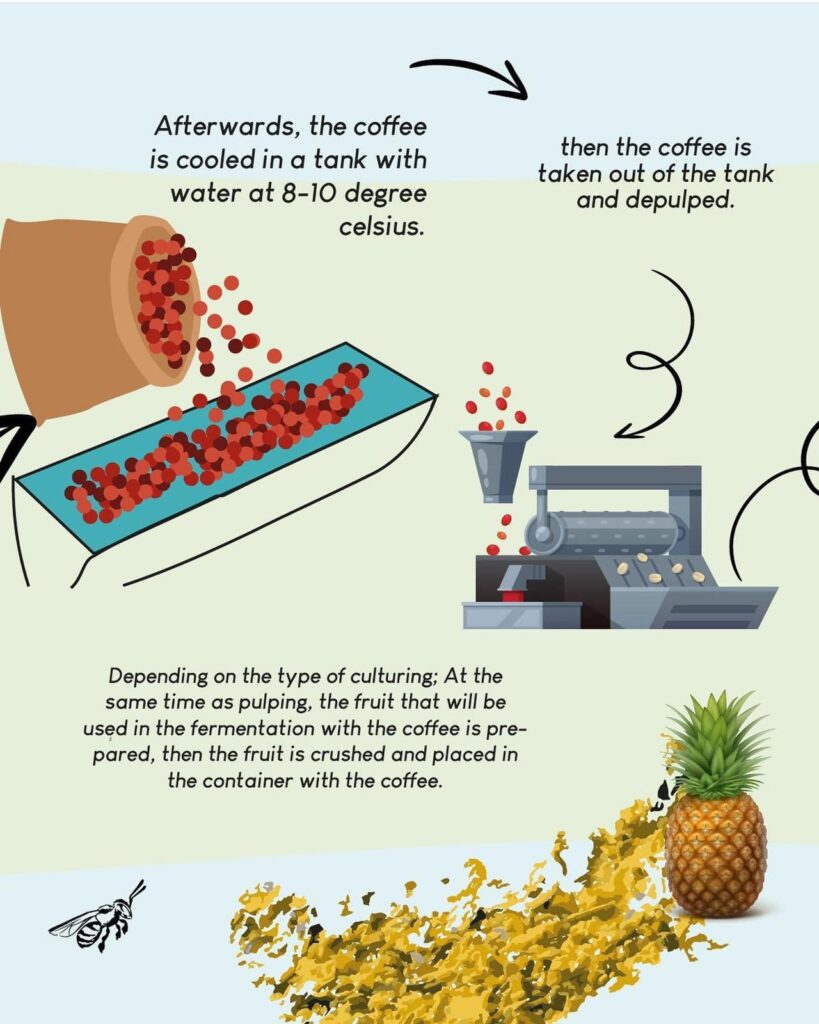
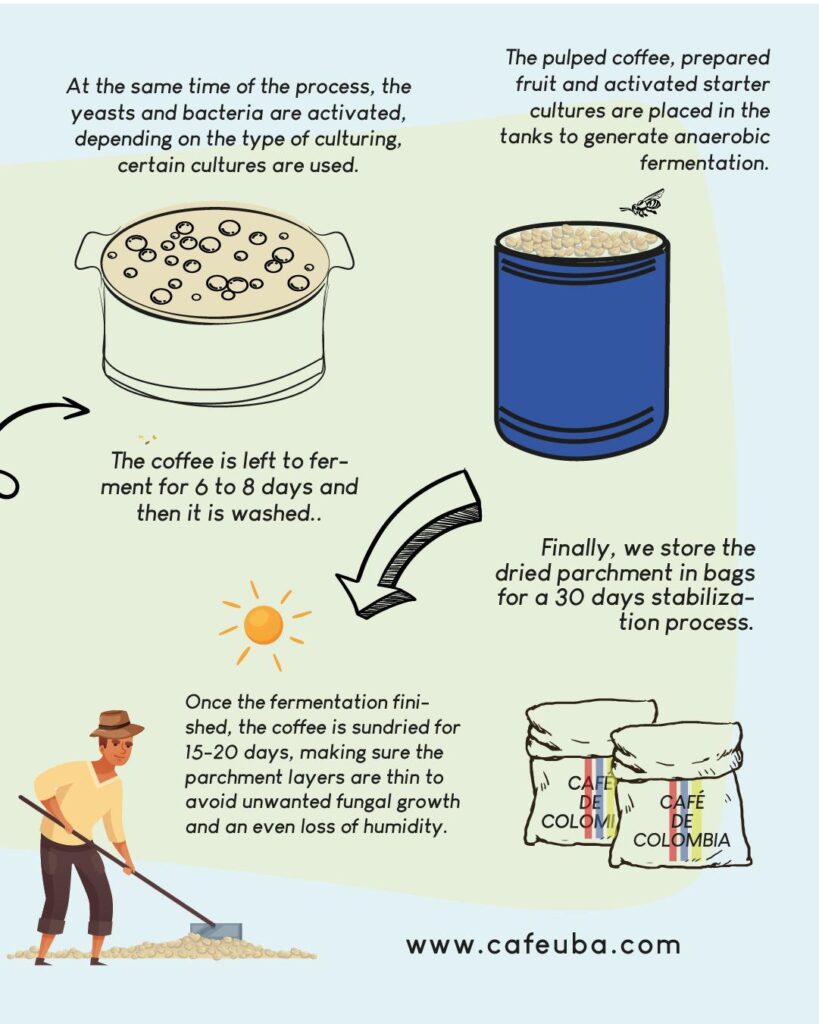
What Culturing is built on
From the technical materials we received for the Café Uba lots, Culturing appears to be built on a washed processing base: the coffee is depulped, fermented under control, then washed before drying.
This is not classic washed processing. It is a modern process in which the fermentation stage plays a much stronger role in the final profile.
A fair way to put it:
Culturing is an experimental process built on a washed base, with fermentation controlled through starter cultures and carefully managed conditions.
How Café Uba describes the process
According to the materials we received from the producer, the process starts from the cherry's activity after harvest. When the cherry is picked, the embryo in the seed begins a metabolic process linked to germination. This process raises the temperature and the exchange of fluids inside the cherry.
Café Uba uses this stage to prepare the coffee for the anaerobic fermentation that follows.
The steps described in the producer's materials include:
- the cherries are placed in sacks for about 10-12 hours to raise the temperature;
- microorganisms present in the environment and on the cherries begin to transform the carbohydrates;
- the coffee is cooled in water at 8-10 C;
- the coffee is depulped;
- depending on the type of Culturing, the fruit used in the fermentation is prepared and crushed;
- the yeasts and bacteria are activated;
- the depulped coffee, the prepared fruit, and the activated cultures are placed in tanks for anaerobic fermentation;
- fermentation lasts about 6-8 days;
- the coffee is washed;
- the coffee is sun-dried for 15-20 days;
- the dried parchment is stabilized in sacks for about 30 days.
What it brings to the cup
Culturing can produce coffees with:
- very clear fruit;
- high sweetness;
- candy-like notes;
- a tropical or floral profile;
- lively acidity;
- an immediately recognizable aromatic impression.
It does not automatically mean that every Culturing coffee is good. The method takes control and skill.
Culturing does not mean infused coffee
The distinction matters when you choose a coffee: Culturing does not mean the aroma was added to the coffee after processing.
In Culturing, the flavor develops during fermentation, through the activity of microorganisms, cultures, and the fermentation environment. We are not talking about a flavor added after processing to artificially copy the result.
There is confusion in the industry between co-fermentation, infusion, and controlled fermentations. That is why it is worth looking for coffees where the method is communicated clearly, not hidden behind a vague term.
When to choose a Culturing coffee
Choose Culturing if you want a coffee with amplified fruit, high sweetness, and an easily recognizable profile. If you prefer classic coffee, with chocolate notes and a subtle profile, this kind of processing may seem too expressive.
These coffees suit people who look for amplified fruit and a cup that differs from the classic profile.
OVRIDE coffees with Culturing
- Logan – Colombia;
- Juicy Madness – Colombia;
- Tropical – Colombia;
- Peach Radiance – Colombia;
- SAKURA Legends – Colombia;
- Captain Mark – Colombia, Culturing (Infused): at the end of fermentation, Café Uba adds liquor.
Frequently asked questions
What does Culturing mean on a coffee label?
It means the producer used a controlled fermentation, with starter cultures and carefully managed conditions. For Café Uba's coffees, Culturing describes their own protocol, which can give very clear fruit notes and an intense sweetness.
Is Culturing washed?
It is not classic washed. It is more accurate to understand it as a modern process built on a washed base: the coffee is depulped, fermented under control, then washed and dried.
Does Culturing have added flavor?
We are not talking about a flavor added after processing. The taste comes from the fermentation and from the way the coffee interacts with the cultures, the microorganisms, and the processing environment.
Continue with
Sources
- Café Uba – https://www.cafeuba.com/pages/about-us
- SCA, "The Fermentation Effect" – https://sca.coffee/sca-news/25-magazine/issue-10/english/the-fermentation-effect-25-magazine-issue-10
- Producer-supplied Culturing images from Café Uba materials: